
Blocked Fallopian Tubes: Causes, Symptoms & Treatment
If you have been trying to conceive for a few months, you must have come across this term - blocked fallopian tubes. Fallopian tube blockage is a very serious reason...
And if you want to get tested for fallopian tube blockage, Dr. Rajeev Agawal, best fertility specialist in Kolkata, is the right doctor for you. With 25+ years of experience, he offers the right fertility support services in Kolkata along with guidance and counselling.
Fallopian Tubes and Their Role in Pregnancy
The fallopian tubes are essential for conception, as this is where the egg and sperm meet. However, if these tubes are blocked or damaged, natural conception becomes difficult.
The good news? Not all blockages are permanent, and in many cases, they can be treated.
What Causes Blocked Fallopian Tubes?
You might not know this, but blocked fallopian tubes are more common than you think. Here are some of the reasons for blocked fallopian tubes:
- Pelvic Infections (PID & STIs) – Infections like chlamydia, gonorrhea, or pelvic inflammatory disease (PID) can damage the tube and leave scars.
- Endometriosis – Endometrial tissue can grow around the fallopian tubes, leading to adhesions and blockages.
- Tuberculosis (Genital TB) – In some cases, undiagnosed tuberculosis can silently affect the reproductive system, causing tube obstruction.
- Previous Surgeries – C-sections, appendectomies, or abdominal surgeries can result in scar tissue that affects tube function.
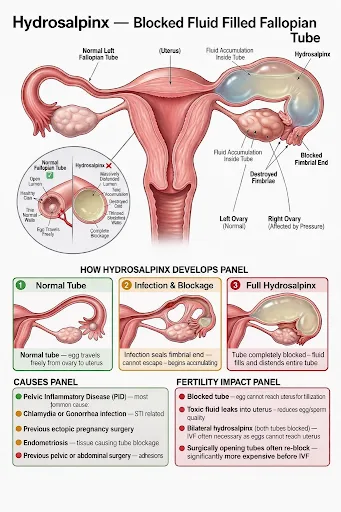
- Hydrosalpinx – A condition where the fallopian tube fills with fluid, preventing sperm and egg from meeting.
Blocked Fallopian Tubes Symptoms
If you think you’ll see symptoms like pain or missed periods due to blocked fallopian tubes, you are wrong, unfortunately. This is the biggest issue with blocked fallopian tubes; they often don’t show obvious symptoms, which is why many women only discover the issue when trying to conceive. However, there are a few blocked fallopian tubes symptoms that may indicate a problem:
- Difficulty getting pregnant
The most common sign is trouble conceiving even after trying for a year or more.
- Pelvic or lower abdominal pain
Some women may experience mild to moderate pain, especially if the blockage is due to infection or conditions like hydrosalpinx. Sadly, this mild pain is often dismissed by women as period pain.
- Pain during periods
Unusual or more intense menstrual cramps can sometimes be linked to underlying reproductive issues. But, this is not a tell-tale sign of blocked fallopian tubes, making diagnosis difficult. If you experience persistent discomfort, it’s advisable to consult a doctor for period pain treatment in Kolkata for a thorough evaluation.
- Pain during intercourse
Discomfort or pain during sex may occur if there is inflammation or scarring in the pelvic area. In such cases, consulting the best sexologist in Kolkata can help identify the underlying cause and guide appropriate treatment.
- Unusual vaginal discharge
Infections like chlamydia can cause fallopian tube blockage. There may be abnormal discharge due to such infections, which can be another symptom of blocked fallopian tubes.
- History of infections or conditions
Past pelvic infections, sexually transmitted infections, or conditions like endometriosis can increase the risk and may be a clue.
Important: Many women with blocked fallopian tubes have no symptoms at all. If you’re trying to conceive and facing challenges, it’s best to consult an expert preconception doctor in Kolkata for a proper diagnosis and treatment.
How Are Blocked Fallopian Tubes Diagnosed?
The first step in treating blocked fallopian tubes is to get a diagnosis. If you've been trying to get pregnant for more than a year and haven't been able to, your doctor may suggest a tubal patency test to see if your fallopian tubes are open.
Common tests include:
- Hysterosalpingography (HSG)
- HyCoSy / HyFoSy
- Laparoscopy with Dye Test
Consult an experienced laparoscopy specialist in Kolkata for precise diagnosis and care.
How Does A Blocked Fallopian Tube Affect Fertility?
The fallopian tubes are very important for pregnancy because this is where the egg and sperm meet. Sperm can't reach the egg if one or both of the tubes are blocked, and fertilization can't happen.
- Stops sperm from reaching the egg
If a tube is blocked, sperm may not be able to get to the egg, which makes it hard for fertilization to happen.
- Prevents the fertilized egg from getting to the uterus
If the fallopian tube is blocked, the embryo may not be able to move to the uterus for implantation, even if fertilization happens.
- Reduces the chances of a natural pregnancy
It is still possible to get pregnant if one tube is blocked, but the chances are lower. It is very hard to get pregnant naturally if both tubes are blocked.
- Increases the risk of having an ectopic pregnancy
If a tube is only partially blocked, the fertilized egg may get stuck in the tube and implant there instead of in the uterus. This can lead to an ectopic pregnancy.
In short, blocked fallopian tubes make it hard for sperm and egg to meet naturally and for the embryo to move safely, both of which are important for a healthy pregnancy.
Fallopian Tube Blockage Treatment Options
If you have a fallopian tube blockage, there are several treatment options:
- Natural remedies: Herbal supplements and yoga
- Medical interventions: Laparoscopy, tubal recanalization
- IVF for severe blockage
Can Blocked Fallopian Tubes Be Opened Naturally or Medically?
Yes, in some cases, fallopian tube blockages can be treated, and you can get pregnant naturally. The fallopian tube blockage treatment mainly depends on how severe the damage is.
1. Hysteroscopic Tubal Cannulation (for minor blockages)
- A thin catheter is inserted into the fallopian tube to clear any small blockages.
- This is effective when the blockage is near the uterus (proximal tubal obstruction).
It is typically performed by an experienced hysteroscopic surgeon in Kolkata for precise and safe treatment.
2. Laparoscopic Surgery (for stuck tubes or mild damage)
- If tubes are stuck due to scar tissue or endometriosis, laparoscopy can help.
- It clears the tube pathway, which helps the fallopian tubes function normally.
- This method is most successful when the blockage is minimal and the tubes are healthy.
3. Treatment for Hydrosalpinx
- If a fallopian tube is filled with toxic fluid, this treatment is used to drain or remove the fluid. If it is severe and recurring, clipping of the tubes laparoscopically may become necessary.
When is IVF the Best Option?
In Vitro Fertilization (IVF) is the best way to get pregnant if your fallopian tubes are damaged, completely blocked, or have been surgically removed.
In IVF, the process of fertilisation occurs in a test tube, outside the body, and an embryo is directly planted into the uterus. This is why IVF can help women with blocked fallopian tubes get pregnant and become mothers.
When you should consult an IVF Specialist in Kolkata:
- Both fallopian tubes are blocked for good.
- The last time they did surgery on the tubes, it didn't work.
- Hydrosalpinx is present and cannot be fixed.
Why Early Testing for Fallopian Tubes Is Important
If you’ve been trying to conceive for a year or more, doctors will recommend a tubal patency test. This test can provide clarity on the next steps.
Even if your tubes appear open, minor blockages or mucus plugs could still affect fertility. In some cases, the flushing effect of the test itself can improve the chances of conceiving and pregnancy.
Final Thoughts
Blocked fallopian tubes can feel like a hurdle in your parenthood journey, but don’t worry, you can still get pregnant if you choose the right fertility expert. With proper diagnosis, guidance, and treatment, like IVF, you can become a parent.
FAQs on Blocked Fallopian Tubes
1. What are the common symptoms of blocked fallopian tubes?
The most common symptom that your fallopian tubes are blocked is that you have trouble getting pregnant. Some women may have pain in their pelvis, painful periods, or pain during sex, but mostly, these symptoms are not detected easily.
2. What are the causes of blocked fallopian tubes in women?
There are a number of things that can block the fallopian tubes. Common causes include pelvic infections, past surgeries, endometriosis, and diseases like pelvic inflammatory disease (PID).
3. Is it possible to treat or open blocked fallopian tubes?
Yes, in some cases, they can be treated, but it depends on what caused it and how bad it is. In some cases, doctors may use medicines, minimally invasive surgeries, or other types of surgery to fix blocked fallopian tubes. Keep in mind that it all depends on what caused the problem and how bad it is.
4. How do doctors diagnose blocked fallopian tubes?
Most of the time, doctors use imaging tests like an HSG, HyCoSy, ultrasound, or laparoscopy to find out what's wrong. These tests check to see if the tubes are open and working properly.
Disclaimer: The content shared by this website is intended for informational purposes only and should not be considered medical advice. For accurate diagnosis and personalized fertility care, please consult a qualified healthcare professional.