


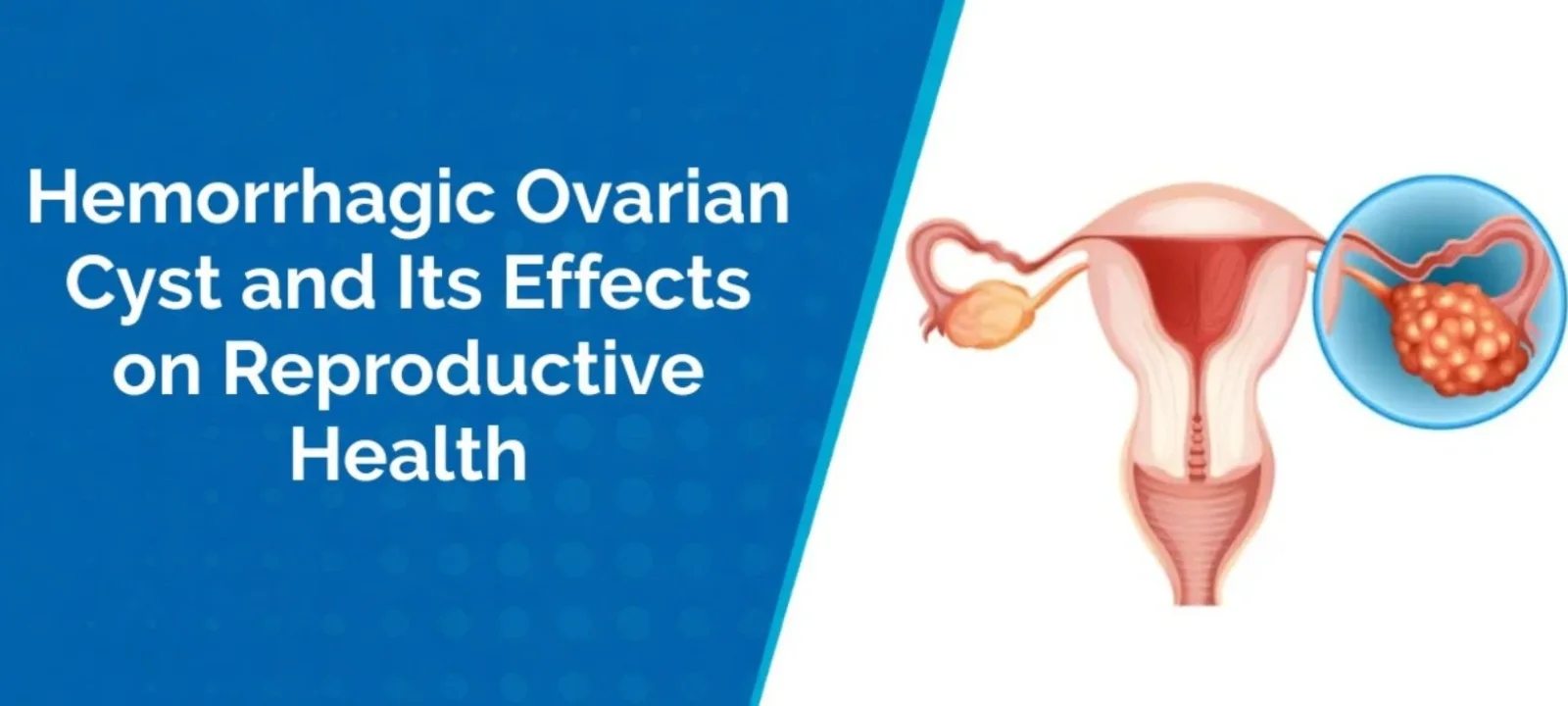
Hemorrhagic Ovarian Cyst and Its Effects on Reproductive Health
Introduction
Hearing the word “cyst” during a scan can feel unsettling. Things like surgery, fertility problems, or something serious come to your mind. But not every ovarian cyst is dangerous. In many cases, a hemorrhagic ovarian cyst clears up on its own without causing long-term problems.
It’s important to understand “Is hemorrhagic cyst dangerous?” and when it needs medical attention.
Knowing the symptoms, causes, treatment options, and fertility impact can help you make informed decisions about your health instead of panicking after reading random internet advice.
What Is a Hemorrhagic Ovarian Cyst?
Let’s start with the basics. If you’ve been wondering about the hemorrhagic cyst meaning or “what is hemorrhagic cyst,” it simply refers to a cyst in the ovary that contains blood. It is also called a blood cyst in ovary.
A hemorrhagic ovarian cyst usually develops when a small blood vessel inside a functional ovarian cyst breaks and bleeds into the cyst. These cysts commonly form during ovulation and are linked to the menstrual cycle.
There are two common types connected with this condition:
- Hemorrhagic follicle cyst
- Hemorrhagic corpus luteum cyst
A hemorrhagic follicle forms when the follicle that releases the egg does not behave as expected. A hemorrhagic corpus luteum cyst develops after ovulation, when the corpus luteum fills with blood.
Causes and Risk Factors Behind Hemorrhagic Ovarian Cysts
Hemorrhagic ovarian cysts don’t have one single cause. They form as part of the normal menstrual cycle, which is why they’re so common in women of reproductive age.
What causes hemorrhagic cyst?
- Natural hormonal fluctuations during ovulation
- Intense physical activity right around ovulation
- Blood-thinning medications (like anticoagulants) that make small vessels more prone to bleeding
- Endometriosis, which increases the likelihood of abnormal cyst formation
- Polycystic ovary syndrome (PCOS), which increases the number of follicles produced in each cycle
Warning Signs and Symptoms of Hemorrhagic Cyst
Many hemorrhagic ovarian cysts cause no symptoms at all. Women often find out about them incidentally during a routine pelvic ultrasound.
But when symptoms do show up, here’s what to watch out for:
- Pelvic pain usually on one side, either dull and persistent or sharp and sudden
- Bloating or a feeling of fullness in the lower abdomen
- Pain during intercourse or bowel movements
- Irregular or delayed periods
- Nausea or light-headedness, especially if the cyst ruptures
Hemorrhagic cyst, when to worry?
Go to the emergency room or contact your doctor immediately if you experience
- Sudden, severe pelvic pain that doesn’t ease up
- Heavy vaginal bleeding outside of your normal period
- Fever alongside pelvic pain
- Dizziness, fainting, or signs of shock
A ruptured hemorrhagic ovarian cyst can cause internal bleeding. While most ruptures are minor and resolve on their own, some require urgent medical attention.
How Hemorrhagic Ovarian Cysts Are Diagnosed
The primary tool for diagnosing a hemorrhagic cyst is a transvaginal ultrasound. This gives the clearest picture of the cyst’s size, location and internal structure. The characteristic “fishnet” or “cobweb” pattern inside the cyst is usually a reliable indicator.
In some cases, your doctor may also ask for a repeated ultrasound after 6-8 weeks to confirm that the cyst is shrinking on its own.
Most hemorrhagic cysts are between 3 and 5 cm in size. A cyst under 5 cm in a woman with no symptoms is typically observed rather than treated. Cysts larger than 5-6 cm, or those that aren’t resolving over time, need closer follow-up.
Can a Hemorrhagic Ovarian Cyst Affect Fertility?
A hemorrhagic ovarian cyst does not cause permanent damage to fertility. Hemorrhagic cysts are functional, meaning they originate from normal ovarian activity, and they disappear within 4-8 weeks. Once the cyst is gone, the ovaries return to normal function.
However, hemorrhagic cysts and fertility become a concern when:
- The cyst is large enough to displace or compress normal ovarian tissue
- Repeated bleeding causes scarring around the ovary or fallopian tube
- The underlying cause is endometriosis or PCOS, both of which independently impact egg quality and ovulation
- A ruptured cyst leads to internal adhesions that affect the tube on the same side.
Women trying to conceive may worry if a hemorrhagic ovarian cyst stops ovulation. In some cycles, ovulation may be temporarily affected, particularly if the cyst interferes with normal follicle development.
Irregular ovulation or recurring cysts are signs your body is asking for help; waiting too long rarely works in your favour. If cysts keep coming back, getting your hormone levels assessed properly is the right thing to do.
Fertility treatment in Kolkata can help you figure out what’s causing it. If you are planning a pregnancy or undergoing fertility care, consulting Dr Rajeev Agarwal, a trusted IVF specialist in Kolkata can help you understand whether the cyst is affecting reproductive health.
Treatment Options for Hemorrhagic Ovarian Cysts
Hemorrhagic cyst treatment depends on the size of the cyst, symptoms, and whether complications are present. Here are the most common hemorrhagic cyst treatment options without surgery and with medical care.
A small, uncomplicated hemorrhagic cyst in a woman who isn’t trying to conceive will usually reabsorb on its own within 4-8 weeks. Your doctor will recommend a follow-up ultrasound to confirm this.
Pain management during this period usually involves anti-inflammatory pain medication. Lower abdominal heat pads can provide relief from discomfort.
Hormonal therapy may be recommended to suppress ovulation and prevent new cysts from forming, particularly in women who develop them repeatedly.
Surgery comes into the picture when the cyst is large, typically 6-8 cm, and not resolving on its own. Or if there are signs of bleeding or rupture, causing haemodynamic instability.
Laparoscopic surgery, which is minimally invasive keyhole surgery, is needed. Surgeons work to disturb as little healthy ovarian tissue as they can.
If there are other gynaecological issues alongside the cyst, getting everything assessed together saves time. Fertility & gynaecological services in Kolkata can help you understand all your options in one place.
When To See a Fertility or Gynaecology Specialist?
Not every hemorrhagic cyst needs a specialist visit. But certain situations make it important to go beyond a routine follow-up:
- You’ve been trying to conceive for 6-12 months without success, and a cyst has been identified
- The cyst is recurring, or you’ve had multiple hemorrhagic cysts over the past year
- You have a known diagnosis of endometriosis or PCOS, alongside the cyst
- Your cyst is larger than 5cm and isn’t resolving
- You’re planning IVF, and an active cyst is present on your ovary
If you’ve had fibroids alongside ovarian cysts, you may want to consult a fibroid specialist in Kolkata as part of a broader gynaecological evaluation. Fibroids and ovarian cysts together need a joined-up approach; each affects fertility through a different route.
Conclusion
A hemorrhagic ovarian cyst is not a diagnosis any woman expects to hear, and it’s natural to have questions. But most of the time, it clears up without any treatment needed.
What matters is knowing when it’s ordinary and when it isn’t. Pay attention to your symptoms. Don’t dismiss severe or sudden pain. And if you’re actively trying to conceive, get a proper fertility evaluation rather than waiting and hoping things work out.
Dr. Rajeev Agarwal works with women navigating exactly these situations, like ovarian cysts, fertility concerns, hormonal issues, as a fertility specialist in Kolkata known for offering compassionate, evidence-based care for women dealing with ovarian cysts, fertility concerns, hormonal imbalances, and complex reproductive health conditions.
FAQs
1. Does a hemorrhagic ovarian cyst stop ovulation?
It can temporarily disrupt ovulation, particularly if the cyst is large or it develops from a dominant follicle that was meant to release an egg that cycle. However, once the cyst resolves, which usually happens within 4-8 weeks, ovulation typically returns to normal.
2. What is the normal size of a hemorrhagic ovarian cyst?
Hemorrhagic cyst normal size range between 3 and 5 cm. A cyst under 5 cm that isn’t causing much trouble is usually left alone and rechecked. A 4 cm hemorrhagic ovarian cyst, for example, would be typically monitored with a follow-up ultrasound rather than treated surgically. Cysts over 6-8 cm that aren’t resolving may need intervention.
3. Can a hemorrhagic ovarian cyst delay periods?
Yes, hormonal changes associated with ovarian cysts can last for days or even weeks in some women.
4. What happens if a hemorrhagic ovarian cyst ruptures during pregnancy?
A ruptured cyst during pregnancy may cause sudden pain and internal bleeding. Get to the emergency room, sudden pain during pregnancy always needs same-day evaluation
5. Can hemorrhagic ovarian cysts cause miscarriage?
Hemorrhagic cysts do not cause miscarriage directly. If there’s heavy bleeding or a known hormonal condition in the background, closer monitoring through the pregnancy is a sensible precaution.
Popular Searches
Fertility & Gynecological Services in Kolkata | Women’s Health Check-up In Kolkata | Vaginismus Therapy In Kolkata | Urinary Laser Therapy In Kolkata | Hysteroscopic Procedure In Kolkata
Popular Blogs
Understanding The Role Of Genetics In Ivf Success | Battling Blood Sugar During Pregnancy | How Sleep Affects Hormonal Balance & Fertility In Women | Birth Control Pills For Pcos: How Long Should You Stay On Them? | Can Ovarian Stimulation Affect Your Next Period Cycle? |