


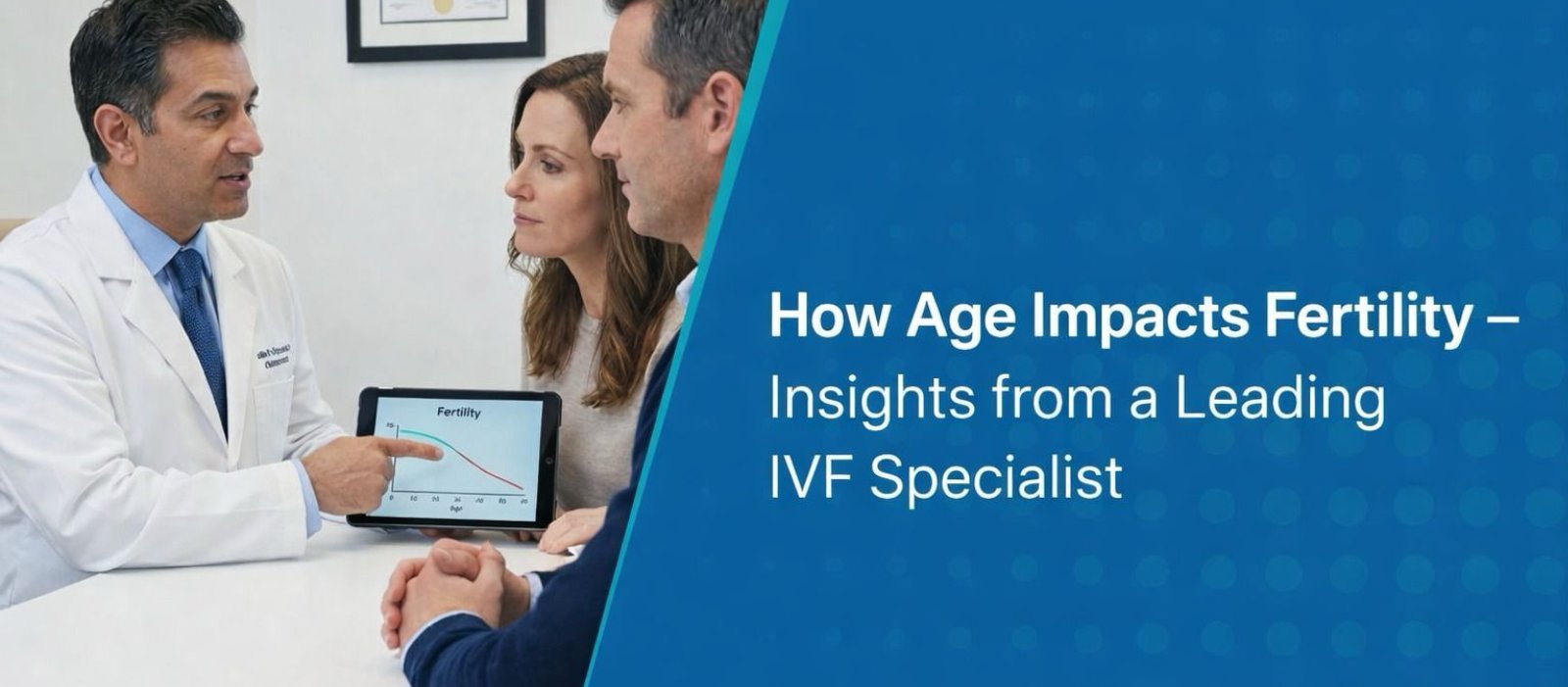
How Age Impacts Fertility – Insights From A Leading IVF Specialist
Key Takeaways
- Fertility declines with age. Female fertility declines significantly after 35, as egg quality and ovarian reserve reduce over time.
- Male fertility also declines gradually with age. After 30, sperm mobility decreases, while after 40 sperm concentration level also decreases.
- Early fertility testing improves chances of success, as IVF success rates depend heavily on age.
- If you are trying to conceive for at least 6 months, and are above 35 years of age, it is best to get an online consultation with gynecologist and discuss your options.
- Advanced fertility treatments can support your dream of parenthood even later in life, but it is important to consult a fertility specialist in time.
In This Article
- Key Takeaways
- Introduction
- How Age Affects Female Fertility Naturally?
- Male Fertility and Age: What You Need to Know
- When to Consult a Fertility Specialist?
- IVF Success Rates by Age
- Lifestyle Factors That Affect Fertility
- Frequently Asked Questions
Introduction
Understanding fertility and how your reproductive health changes with age, is very important for couples trying to conceive. Even if you are not currently planning to become a parent, it is essential to understand age specific fertility rate, factors affecting total fertility rate, and the right time to get help from a fertility or IVF specialist. This helps you better prepare for the future and avoid complications later.
How Age Affects Female Fertility Naturally?
Female fertility by age is closely linked to changes in egg quality and ovarian reserve. As women grow older, both egg quality and quantity decline, affecting their fertility. Understanding ovarian reserve by age and referring to a female fertility chart age can help women better assess their reproductive health and plan pregnancy accordingly.
20-30 Years: Peak Fertility Age Female
The peak fertility age for females is typically between 20 and 30 years. During this time, their ovarian reserve is higher, egg quality is optimal and therefore chances of natural conception are highest. This women fertility age is the right time for conception, but you should always get pre conceptional counselling for a smooth pregnancy.
Why Fertility Declines After 35
At what age does fertility start declining? Usually, after 35, fertility declines for most women. This decline is closely linked to the ovarian reserve and age relationship.Fertility After 40, the drop is sharper due to reduced ovarian reserve, declining egg quality, and other chromosomal abnormalities.
This is why fertility declines with age and you might need a fertility specialist to conceive after 35 years of age. At this point, getting preconception care by an experienced fertility specialist can support a healthy pregnancy.
Male Fertility And Age: What You Need To Know
Most men believe that age doesn’t matter when it comes to male fertility. While men can remain fertile longer than women, male fertility age also matters. Sperm quality and age are closely related.
What Changes In Male Fertility By Age?
Studies have shown that males aged 41+ years have lower sperm concentration levels and males aged 31+ years were more likely to have decreased sperm motility.
Men can produce sperm lifelong, but fertility efficiency declines gradually. This is why male fertility and age are checked during the fertility diagnosis of couples. If you are above 35 and are unable to conceive despite trying for over 6 months, you should get infertility help and fertility support services.
When To Consult A Fertility Specialist?
Consulting a fertility specialist can definitely make the process of conceiving easier for couples. Here’s when you should consult a fertility specialist:
- If you are under 35 and trying to conceive for at least 1 year
- You are over 35 and trying for 6 months
- Have irregular cycles or other conditions like PCOS, thyroid, or endometriosis
- You have a history of miscarriages.
Having painful periods can be a symptom of endometriosis, so if you aren’t diagnosed with endometriosis but have extremely painful periods, we recommend consulting a women’s fertility expert and getting period pain relief solutions. Getting PCOS care early on can also improve your chances of conception.
IVF Success Rates By Age
Now that you know the factors affecting the total fertility rate, let us have a look at the average success rate of IVF by age.
| Age Group (in Years) | Average IVF Success Rate in India (with own eggs) |
| Below 30 | 45-65% |
| 30-35 | 40-60% |
| 35-40 | 25-40% |
| Above 40 | 10-20% |
Lifestyle Factors That Affect Fertility
Along with age specific fertility rate, here are some lifestyle factors that significantly affect fertility in both men and women:
1. Weight and BMI:
Being significantly overweight or underweight can disrupt hormone balance, menstrual cycles, and ovulation in women.
In men, obesity can cause reduced testosterone levels and lower sperm quality.
2. Smoking and Tobacco Use:
Smoking is the worst thing for your reproductive health. It accelerates egg loss, damages fallopian tubes, and may cause premature ovarian aging in women. In men, it lowers sperm count, motility, and DNA quality.
Even passive smoking can negatively impact fertility.
3. Alcohol Consumption:
Excessive alcohol can affect fertility in both men and women. When trying to conceive, limiting or avoiding alcohol is strongly recommended.
4. Diet and Nutrition:
Processed foods, high sugar intake, and nutritional deficiencies may negatively impact fertility.
5. Stress and Mental Health:
Chronic stress can disturb reproductive hormones, potentially delaying ovulation in women and reducing sperm production in men.
Managing stress, proper sleep, and improved mental health can improve overall fertility.
Frequently Asked Questions
1. Can stress or lifestyle factors affect fertility?
Yes, stress and poor lifestyle factors are among the leading causes of infertility, especially in men. Smoking, drinking, obesity, and poor sleep can cause infertility.
2. At what age does fertility start declining in women?
In women, fertility significantly declines after 35 years of age. Although this does not mean you cannot get pregnant after 35, you just need better preconception care and guidance.
3. Does male age affect fertility?
Yes, male age has a huge effect on fertility. DNA integrity and Sperm quality decline with age, which can affect conception.
4. Does IVF work after 40?
IVF can work after 40, but success rates are lower with one’s own eggs. You can use donor eggs to improve IVF success rate after 40. Advanced techniques exist that can improve the chances of pregnancy if you consult the right fertility specialist.
5. Is a female fertility test painful or complicated?
No, most fertility tests involve blood tests and ultrasounds and are slightly uncomfortable. You don’t have to worry about pain.
6. What is the best age to freeze eggs for future pregnancy?
If you are planning a pregnancy later in life, it is best to freeze eggs before you turn 35. The sooner, the better in this case.
Services By Concern
Period Pain Relief Solutions | Fibroid Treatment Solutions | Urinary Health Services | Healthy Aging Programs | Sexual Pain Relief Therapy | Menopause Wellness |
Services By Procedure
Vaginismus Therapy | Urinary Laser Therapy | Laparoscopic Surgery | Hysteroscopic Procedure | Women’s Health Checkup |
Popular Blogs
Understanding The Role Of Genetics In Ivf Success | Battling Blood Sugar During Pregnancy | How Sleep Affects Hormonal Balance & Fertility In Women | Birth Control Pills For Pcos: How Long Should You Stay On Them? | Can Ovarian Stimulation Affect Your Next Period Cycle? |