


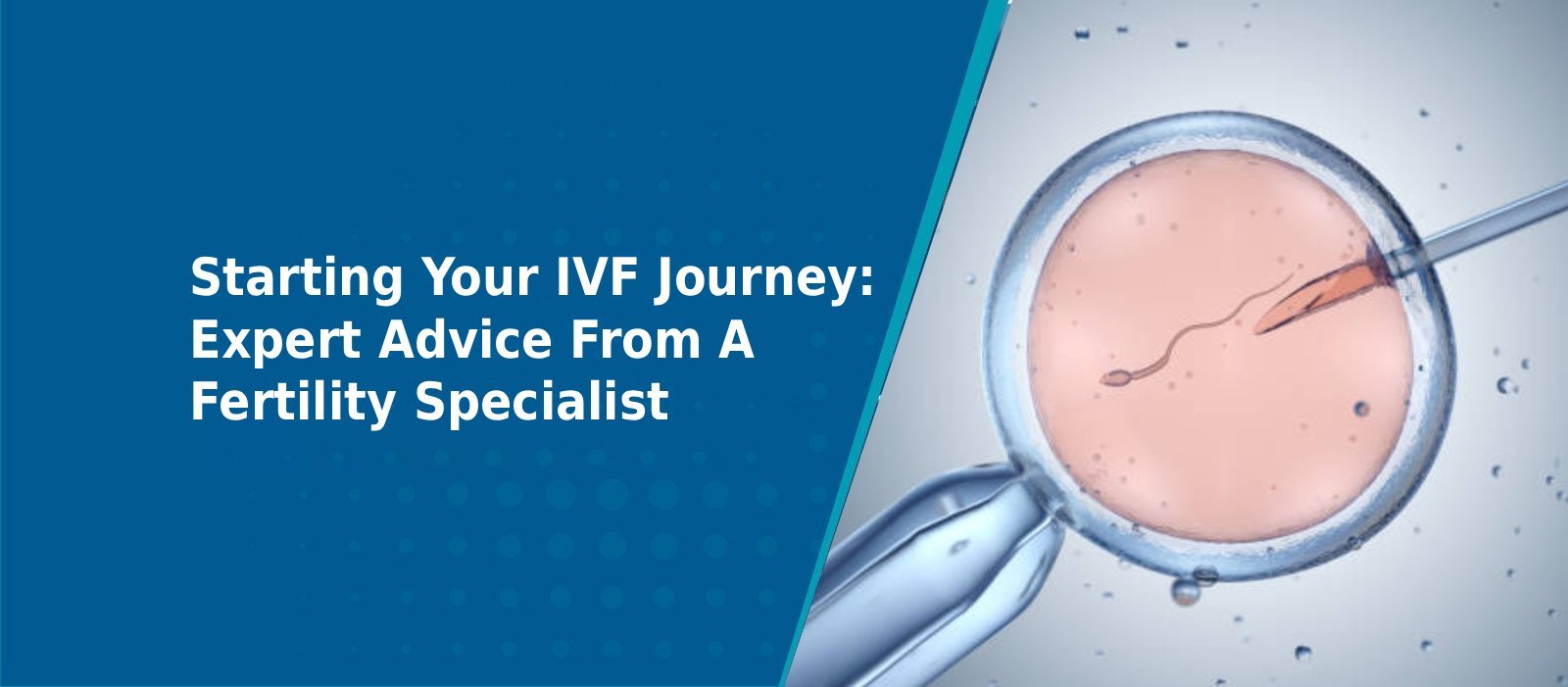
Starting Your IVF Journey: Expert Advice From A Fertility Specialist
Key Takeaways
- IVF is one of the most advanced fertility treatment options available today, which has helped couples achieve their dream of parenthood.
- The IVF procedure follows a carefully structured, step-by-step process, from ovarian stimulation to embryo transfer, ensuring precision and safety at every stage.
- Age of the couple plays a crucial role in determining IVF success rates, particularly due to its impact on egg quality and ovarian reserve.
- You need to have proper physical, emotional, and medical preparation before starting IVF treatment.
- IVF is not generally painful, but it can be an emotional journey for couples. This is why staying stress-free can significantly improve the chances of achieving a successful pregnancy.
- Choosing an experienced IVF specialist and a well-equipped center greatly influences your IVF success rate and overall experience.
In This Article
- Key Takeaways
- Introduction
- What Is IVF? A Beginner’s Guide
- When Should a Couple Consider IVF Treatment?
- Step-By-Step Guide To The IVF Process
- Practical Expert Tips For Your IVF Journey
- IVF Success Rates: Setting Realistic Expectations
- Frequently Asked Questions
Introduction
Parenthood is a dream for many, but for several reasons, many couples require assistance in conception and pregnancy. This is where an IVF pregnancy comes into the picture!
Beginning your IVF journey is a significant emotional and medical decision. Couples often feel hopeful yet anxious about what lies ahead in the whole IVF procedure.
In Vitro Fertilization (IVF) is one of the most effective fertility treatment options available today. With advancements in reproductive medicine, IVF treatment in India has become more precise, safer, and increasingly successful. Dr. Rajeev Agarwal has a 70% IVF success rate. This guide explains what is IVF, how it works, IVF procedure step by step, and what you can realistically expect during your first IVF cycle.
What Is IVF? A Beginner’s Guide
Many couples ask, “What is IVF treatment, and how to prepare for IVF?”
IVF (In Vitro Fertilization) is a fertility treatment in which eggs are taken from the ovaries and fertilized with sperm in a specialized laboratory. The resulting embryo is then transferred into the uterus to achieve pregnancy. It is the same process of fertilisation, except it does not happen inside the female’s body. Understanding how to prepare your body for IVF treatment can help improve the chances of a successful outcome and support overall reproductive health.
In simple terms, IVF helps overcome the barriers to conception, especially in couples who have ovulation disorders (PCOS), low sperm count & mobility, or high maternal age, poor ovarian reserve.
When Should A Couple Consider IVF Treatment?
Not every couple experiencing infertility needs IVF. There are many other fertility & gynecological services that support conception.
IVF treatment for infertility is recommended if you have:
- Blocked or damaged fallopian tubes
- Severe male infertility (poor sperm count + low mobility)
- Endometriosis
- PCOS (not responding to basic PCOS care)
- Repeated IUI failures
- Unexplained infertility
- Advanced maternal age
Couples who have been trying unsuccessfully for a year (or six months if the woman is above 35) should consider seeking infertility help.
Step-By-Step Guide To The IVF Process
Understanding the IVF procedure step by step reduces anxiety and builds confidence. Here is the IVF procedure explained for a better understanding of the IVF treatment steps:
1. Initial IVF Consultation
A detailed medical evaluation of both the man and woman is conducted, which includes hormone tests, ovarian reserve assessment, semen analysis, and ultrasound. IVF treatment is personalised based on age and fertility factors.
2. Ovarian Stimulation
Hormonal injections are mainly used to stimulate the ovaries to produce multiple mature eggs instead of one. Regular monitoring is done through ultrasound to ensure follicle growth.
3. Egg Retrieval
Once the follicles are ready, eggs are retrieved through a minor procedure performed under mild anesthesia. It typically takes 15–20 minutes.
4. Fertilization
The retrieved eggs are fertilized with sperm in the laboratory. In cases of male infertility, ICSI (Intracytoplasmic Sperm Injection) may be used, which increases the IVF success rate in first attempt.
5. Embryo Development
Fertilized eggs develop into embryos over 3 to 5 days in a controlled lab environment.
6. Embryo Transfer
A healthy embryo is selected and placed into the uterus through a simple, painless procedure. IVF treatment in India usually takes 4-6 weeks.
7. Pregnancy Test
A blood test is done after approximately 12–14 days to confirm pregnancy.
This IVF process explained for beginners helps patients understand what to expect during their first IVF cycle.
Practical Expert Tips For Your IVF Journey
Many couples ask how to make IVF successful the first time. Even though IVF may take more than one attempt in some couples, there are a few practical things you can do to improve your chances of conceiving in the first time. Here are some expert IVF tips and advice for patients:
- Maintain a healthy BMI: A healthy body supports a healthy pregnancy. Being overweight or underweight really reduces your chances of getting pregnant.
- Lifestyle changes: Avoid smoking and alcohol. Follow a protein-rich, balanced diet, and exercise regularly, even if you have a healthy BMI. This applies to both the man and the woman.
- Stress management: Manage stress through better sleep. You need to be mentally and emotionally fit for pregnancy.
- Medications are non-negotiable: Take prescribed supplements and medicines regularly and get regular online consultation with a gynecologist.
- Right guidance is key: Choose an experienced fertility specialist for fertility support services. Understanding how to choose the right fertility specialist for IVF treatment can help you make informed decisions and improve your chances of successful conception.
Ivf Success Rates: Setting Realistic Expectations
IVF success rates by age vary significantly. Here’s a realistic average IVF success rate in India:
| Age Group (in Years) | Average IVF Success Rate in India (with own eggs) |
| Below 30 | 45-65% |
| 30-35 | 40-60% |
| 35-40 | 25-40% |
| Above 40 | 10-20% |
IVF success rate in India depends on multiple factors. It is important to understand that IVF success rate in the first attempt varies. Some couples conceive in the first cycle, while others may require more than one attempt. Proper counseling helps set realistic expectations.
Frequently Asked Questions
1. How long does the IVF process take?
A single IVF cycle typically takes 4 to 6 weeks from consultation to pregnancy testing. You should be mentally prepared for your IVF journey.
2. How many embryos are transferred during IVF?
Usually, one high-quality embryo is transferred to reduce the risk of multiple pregnancy, depending on age and clinical scenario. However, this can change according to the patient’s age, reproductive health, and other factors.
3. Can IVF help with male infertility?
Yes, in male infertility, mostly low sperm count and mobility hamper conception. Techniques like ICSI directly inject a sperm into the egg, helping with male infertility.
4. Can lifestyle changes improve IVF success?
Yes. Weight management, quitting smoking, proper sleep, and stress reduction positively influence IVF treatment process outcomes.
5. Can the In Vitro Fertilization technique work in the first attempt?
Yes, many couples achieve pregnancy in their first IVF cycle, but success depends on age, egg quality, sperm quality, and overall health.
Services By Concern
Period Pain Relief Solutions | Fibroid Treatment Solutions | Urinary Health Services | Healthy Aging Programs | Sexual Pain Relief Therapy |
Services By Procedure
Vaginismus Therapy | Urinary Laser Therapy | Laparoscopic Surgery | Hysteroscopic Procedure | Preconception Care | Women Health Checkup |
Popular Blogs
Understanding The Role Of Genetics In Ivf Success | Battling Blood Sugar During Pregnancy | How Sleep Affects Hormonal Balance & Fertility In Women | Birth Control Pills For Pcos: How Long Should You Stay On Them? | Can Ovarian Stimulation Affect Your Next Period Cycle? |