


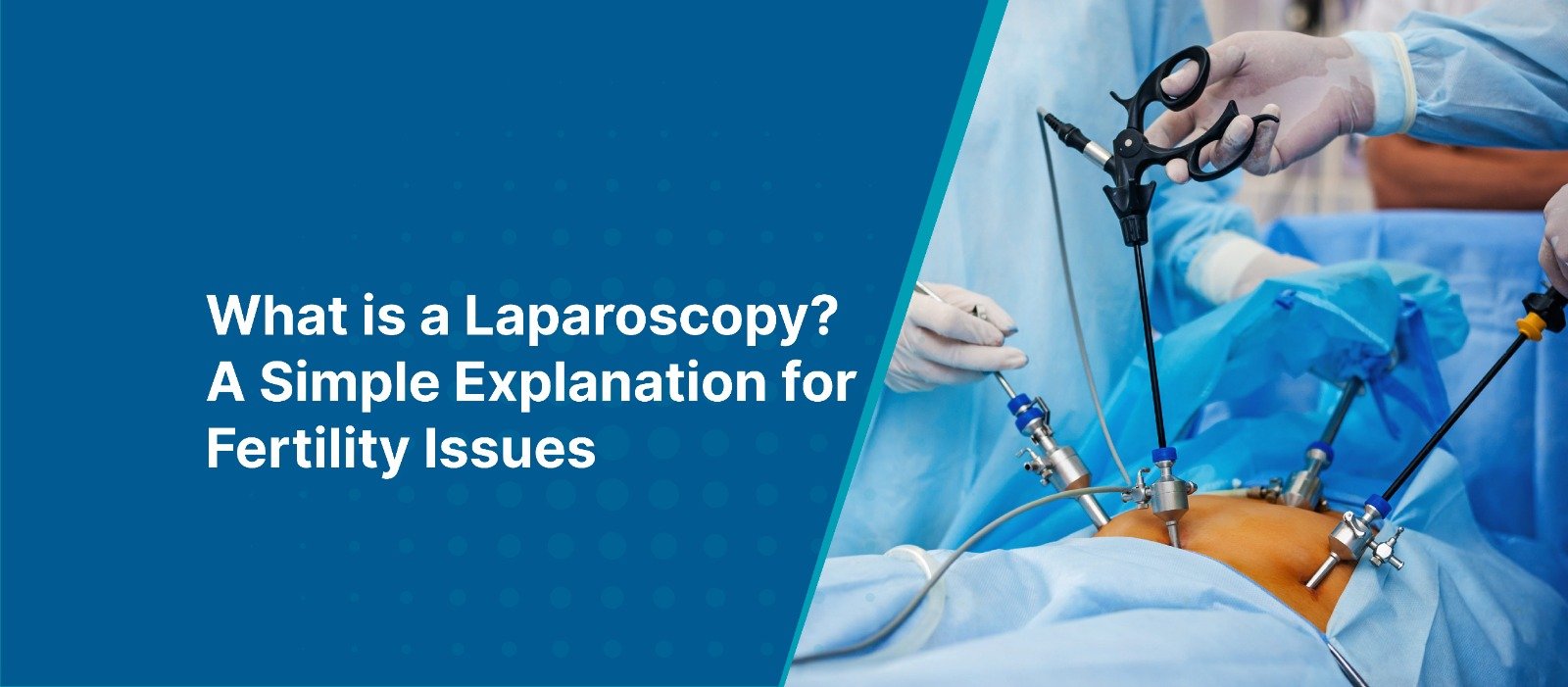
What is a Laparoscopy? A Simple Explanation for Fertility Issues
Fertility challenges can be emotionally and physically taxing for couples. One of the key tools in modern fertility care is laparoscopy — a minimally invasive surgical procedure that can help identify and treat underlying conditions affecting conception.
Many patients ask what laparoscopy involves, why doctors recommend it, and what recovery looks like. This guide, curated by Dr. Rajeev Agarwal, explains everything you need to know in simple terms.
For related fertility treatments, you can also explore our IVF and IUI services for comprehensive care.
Why Laparoscopy is Done
Doctors often advise laparoscopy when other diagnostic tools like ultrasound or blood tests cannot provide a clear picture of the problem. It serves both diagnostic and therapeutic purposes.
Common conditions that laparoscopy can detect or treat include:
- Endometriosis: A condition where tissue similar to the uterine lining grows outside the uterus, affecting fertility.
- Fibroids: Non-cancerous growths in the uterus that may interfere with implantation.
- Blocked Fallopian Tubes: Obstructions that prevent sperm from meeting the egg.
- Ovarian Cysts: Fluid-filled sacs on the ovaries that can affect ovulation.
By addressing these conditions, laparoscopy can improve the chances of conception, either naturally or in conjunction with assisted reproductive technologies like IVF.
How the Procedure Works
Doctors design laparoscopy to be minimally invasive, which means it involves smaller incisions, causes less pain, and allows faster recovery compared to traditional surgery.
Here’s a step-by-step overview:
- Preparation: The medical team administers anesthesia to ensure the patient’s comfort during the procedure.
- Small Incision: The surgeon makes a tiny cut, usually near the navel.
- Camera Insertion: The surgeon inserts a laparoscope (a thin tube with a camera) to view the pelvic organs on a monitor.
- Diagnosis and Treatment: The surgeon can inspect the uterus, ovaries, and fallopian tubes. In many cases, minor procedures like removing cysts or adhesions can be performed simultaneously.
- Closure: The incision is closed with a few stitches or surgical glue, leaving minimal scarring.
Typically, the procedure lasts 30–60 minutes, and most patients are discharged the same day.
Read more about fertility diagnostics to understand other tests that complement laparoscopy.
Benefits of Laparoscopy in Fertility Care
Laparoscopy offers several advantages over traditional exploratory surgery:
- Less Pain: Smaller incisions lead to reduced postoperative discomfort.
- Faster Recovery: Patients usually return to normal activities within a few days.
- Better Accuracy: Direct visualization of reproductive organs improves diagnostic precision.
- Treatment During Diagnosis: Some issues, like endometriotic cysts or adhesions, can be corrected during the same procedure, enhancing fertility outcomes.
In many cases, women experience improved chances of conception after laparoscopy, especially when previously unexplained infertility is involved.
Risks and Recovery Tips
While laparoscopy is generally safe, like any surgical procedure, it carries some risks:
- Minor Discomfort: Mild bloating or abdominal pain for a few days.
- Infection: Rare, but possible; proper wound care is essential.
- Bleeding: Minimal, usually resolved with observation.
Recovery Tips:
- Follow the medication regimen prescribed by your doctor.
- Avoid strenuous activities for at least a week.
- Maintain a light, nutritious diet to aid healing.
- Attend all follow-up appointments to monitor recovery.
Dr. Rajeev Agarwal emphasizes that adhering to these guidelines ensures the best outcomes and minimal complications.
Dr. Rajeev Agarwal’s Insight
As a fertility specialist, Dr. Rajeev Agarwal has observed that laparoscopy is one of the safest and most precise tools for evaluating unexplained infertility.
“Laparoscopy allows us to see what imaging tests sometimes cannot. For many women struggling with infertility, it provides clarity and, in some cases, immediate correction of issues, paving the way for successful conception.”
Couples considering fertility treatment are encouraged to discuss their options in detail with their doctor. Laparoscopy might be recommended as a diagnostic step before IVF, or when natural conception is being pursued.
You can learn more about Dr. Agarwal’s approach to infertility treatments and patient care here.
Conclusion
Laparoscopy is a modern, minimally invasive procedure that plays a crucial role in fertility management. It not only helps identify conditions that may affect conception but also allows for correction during the same procedure in many cases.
By understanding the benefits, risks, and recovery steps, couples can make informed decisions about their fertility journey. With the guidance of experienced specialists like Dr. Rajeev Agarwal, laparoscopy can be a safe and effective step toward achieving pregnancy.
For further guidance, explore our fertility services to learn how laparoscopy integrates with comprehensive reproductive care.