


Essential Tests Before Pregnancy in India: What You Actually Need to Check and Why
Every week, I sit with couples who have just decided they want to start a family. Some of them have been planning this for years. Some of them made the decision last month. And almost all of them come in with the same question, asked in different ways:
“Doctor, what tests do we need to do before we start trying?”
It is the right question. What follows is my honest answer about the most important tests before pregnancy India couples should actually consider, not a generic list copied from a government checklist, but the actual investigations I recommend to couples in my clinic, with the reasoning behind each one.
Because here is what I have learned over years of doing this: most couples who come for preconception counselling in Kolkata are not just looking for a list of preconception investigations. They are looking for someone to explain why each test matters. And when they understand the why, they actually do the tests, all of them, not just the convenient ones.
So let me explain why.
Why a Routine Check-Up Is Not the Same as Preconception Testing
When most people say they have had a recent check-up, they mean blood group, haemoglobin, and maybe a thyroid test. That is a good start. It is not a preconception assessment.
A preconception assessment is different in purpose and in design. Its goal is not to find out whether you are healthy in a general sense. Its goal is to find out whether your body and your partner’s body are optimised for the specific demands of conception, early pregnancy, and foetal development. Those are different questions. They require different answers. For couples wondering what to check before pregnancy, this distinction matters enormously
Many couples assume basic health checkups are enough before pregnancy. However, preconception blood tests in India are designed specifically to evaluate fertility health, pregnancy readiness, and potential risks that may affect conception or foetal development.
Think of it like preparing a meal. You cannot make a wholesome, nourishing meal by checking only one or two ingredients. Every element has to be right – the protein, the iron, the vitamins, the fats, the timing. A pregnancy is no different. One missed deficiency, one undetected carrier status, one unaddressed hormonal imbalance, and the outcome changes. Not always. But sometimes. And when it does, it is almost always preventable.
Blood Tests Every Woman Should Have Before Trying to Conceive
Haemoglobin and Ferritin
I do not test just haemoglobin. I test ferritin as well, and the distinction matters enormously.
Haemoglobin can look normal even when your iron stores are critically low. Ferritin is the storage form of iron and it is ferritin that gets depleted first, long before haemoglobin drops. A woman who enters pregnancy with low ferritin is at high risk of iron deficiency anaemia by the second trimester, which affects everything from energy and immunity to placental function and the baby’s developing brain.
In India, where dietary iron insufficiency is widespread, especially in women who are vegetarian, testing ferritin before pregnancy is not optional. It is one of the most important fertility tests India specialists recommend before conception.
Vitamin B12
Vitamin B12 deficiency is one of the most common and most overlooked nutritional gaps in Indian women planning pregnancy, and it is almost entirely invisible until you test for it.
In India, where a large proportion of the population is vegetarian or largely plant-based in their diet, B12 deficiency is endemic. B12 is found almost exclusively in animal-derived foods meat, fish, eggs, and dairy. Women who eat little or none of these, particularly over years, often have critically depleted stores long before they start thinking about pregnancy.
Why does this matter so specifically? B12 works alongside folic acid in the same critical metabolic pathway that prevents neural tube defects. Without adequate B12, folic acid supplementation alone is not sufficient. B12 deficiency is also independently linked to recurrent early pregnancy loss, impaired egg quality, and poor embryo development. I have seen women who were conscientiously taking folic acid for months and still had a B12 level that made the supplementation far less effective than it should have been.
I test B12 on every woman. If levels are low, which they frequently are, we correct this with supplementation well before conception begins. It takes months to meaningfully restore B12 stores. This is not a test to order after you have already started trying. B12 assessment should ideally be included in all comprehensive preconception investigations.
Thyroid – TSH
The thyroid gland has an outsized influence on fertility and early pregnancy that is still underestimated in routine care. TSH – Thyroid Stimulating Hormone – is the marker we use to assess thyroid function.
The key point here is the target number. Your routine lab report will say your TSH is normal if it falls below 4.5 or even 5 mIU/L. For a non-pregnant person going about their life, that may be acceptable. For someone trying to conceive, it is not.
When you are trying to get pregnant, I want your TSH below 2.5 mIU/L. The early pregnancy demand on the thyroid is substantial in the first trimester, before the baby’s own thyroid is functional, your thyroid is supplying hormones for two. A TSH that is 3.8 and “normal” by your lab’s reference range can impair ovulation, reduce implantation success, and increase the risk of early pregnancy loss. We found it. We treat it. And it is almost always straightforward to correct before pregnancy begins. This is one of the most essential tests before pregnancy India fertility specialists focus on.
Glucose Metabolism – PP 75g Glucose Load and HOMA-IR
This is where I depart most sharply from what most couples are told elsewhere.
The standard advice is: check your fasting blood sugar. If it is normal, you are fine. I do not agree with this approach for women planning pregnancy, particularly in India where insulin resistance is extraordinarily prevalent even in women who are not overweight, not diabetic, and have no symptoms at all.
Insulin resistance is a condition where your body produces insulin normally but your cells do not respond to it effectively. It drives PCOS, disrupts ovulation, impairs egg quality, and increases the risk of gestational diabetes during pregnancy. Fasting glucose misses it in a large proportion of cases.
What I use instead is a 75g oral glucose challenge, the same test used to diagnose gestational diabetes, done at the right time in the right context preconceptionally. Combined with HOMA-IR (a calculated index of insulin resistance), this gives me a far more accurate picture of glucose metabolism than a fasting value alone. If insulin resistance is present, we can address it with targeted interventions dietary, lifestyle, and sometimes medication before pregnancy begins.
Immunity Checks – Rubella IgG and Varicella IgG
Rubella and varicella are two infections that are almost harmless in a healthy adult but potentially devastating in early pregnancy. Rubella in the first trimester can cause congenital rubella syndrome: deafness, heart defects, cataracts, and developmental delay. Varicella in pregnancy carries serious risks to both mother and baby.
Both conditions are preventable. Both have vaccines. And both vaccines critically cannot be given during pregnancy because they contain live attenuated viruses.
This is why checking immunity before pregnancy is not optional. These immunity checks are an important part of understanding what to check before pregnancy. If your Rubella IgG is negative, you need a vaccine now, before you start trying. The same applies to varicella if you have no history of chickenpox and your IgG is negative. The window to vaccinate is before conception, not after.
I test every woman. I do not assume immunity.
Hepatitis B Surface Antigen
Hepatitis B can be transmitted from mother to child during delivery. A baby born to a hepatitis B positive mother without appropriate intervention immunoglobulin and vaccine at birth has a very high risk of becoming a chronic carrier, with lifelong liver disease implications.
The good news: this is entirely preventable with the right preparation. The not-so-good news: you have to know the status before the baby is born ideally before pregnancy to make the necessary arrangements. We test. We counsel. We plan.
AMH – Anti-Müllerian Hormone
Let me be clear about something that surprises many of my patients: I recommend the AMH test before pregnancy for every woman who comes to me for preconception counselling. Not just those above 35. Not just those with irregular cycles. Every woman.
AMH reflects the size of your remaining egg pool and your ovarian reserve. It does not tell you whether you will conceive, and a low AMH is not a sentence. But it tells me something clinically important: how much time you have, and how urgently we need to move.
A 29-year-old woman with a very low AMH may need to be counselled differently from a 29-year-old with a normal reserve. Not because she cannot conceive naturally, but because she deserves to know where she stands so she can make informed decisions about timing. That information is only available if you test. That is why the AMH test before pregnancy has become such an important fertility planning tool. And I test everyone.
Scans and Assessments
Pelvic Ultrasound
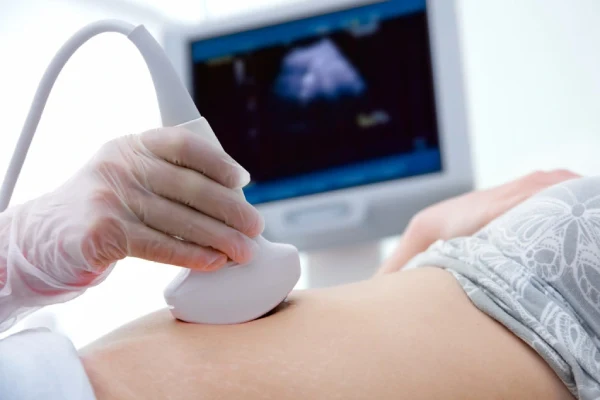
A preconception pelvic ultrasound is not a routine scan – it is a structured assessment with a specific purpose.
On the uterine side, I am looking at the shape of the cavity, the thickness and texture of the endometrial lining, and the presence of any fibroids or polyps that might interfere with implantation. A submucosal fibroid, even a small one sitting inside the uterine cavity, can make the difference between an embryo that implants and one that does not. It has no symptoms. It will not announce itself. But it shows up on a scan.
On the ovarian side, alongside checking for features of PCOS or endometriosis, I specifically count the antral follicles, the small resting follicles visible on ultrasound that represent your immediately recruitable egg pool. The Antral Follicle Count (AFC) is one of the two most important markers of ovarian reserve, alongside AMH. Together, they give a far more complete picture than either test alone.
An AMH in the normal range with a low AFC or vice versa changes how I counsel a couple about timing and urgency. This is why both are always done together in my clinic. A number on a blood test and a count on a scan, read alongside each other, tell a story that neither can tell alone.
Many conditions that silently affect fertility are detected incidentally on a pelvic scan done for the first time. A small uterine septum. An ovarian endometrioma. A submucosal fibroid distorting the cavity. These are not conditions that announce themselves. They are conditions that quietly affect outcomes until someone looks.
Pap Smear
If you have never had a cervical smear or if you are due for one, preconception is the right time to get it done. Smears are not performed during pregnancy, and any result that requires follow-up is far easier to manage before conception than after. If you have had a normal smear recently, you do not need to repeat it. If you have not had one at all, do not delay.
Chlamydia IgG – The Silent Fertility Threat Most Couples Have Never Heard Of
Chlamydia is the most common bacterial sexually transmitted infection in the world. It is also, in the vast majority of cases, completely silent. No pain. No discharge. No symptoms of any kind. And yet, left undetected and untreated, it causes progressive scarring of the fallopian tubes, damage that is irreversible and that significantly reduces the chances of natural conception.
Chlamydia IgG is a blood test that detects antibodies to chlamydia, meaning it tells me whether you have had a past chlamydia infection, even if you never knew about it. It is one of the lesser-known but important fertility tests India specialists increasingly recommend. A positive result does not mean you have an active infection right now. It means your immune system encountered it at some point. And that information matters, because it tells me there is a risk of tubal damage that I need to investigate further before we assume natural conception is the best path.
I include Chlamydia IgG in my preconception panel because the conversation it opens is important. A woman who has never had pelvic inflammatory disease, never had symptoms, never had reason to suspect anything and whose chlamydia IgG comes back positive now has information that could change her entire fertility workup. We can investigate tubal patency. We can adjust the plan. We can avoid months or years of trying naturally when the tubes may not be open.
It is a simple blood test. The conversation it prevents is not simple at all.
What Your Husband Needs to Be Tested For
I will not repeat in full what I have covered in a separate blog on the husband’s role in preconception health, but the short answer is his tests matter as much as yours. Male evaluation is equally important in modern tests before pregnancy India protocols.
At minimum, I want a semen analysis covering count, motility, and morphology. In many cases, I also request a DNA Fragmentation Index because a normal basic semen analysis can coexist with high DNA damage, which affects fertilisation, embryo quality, and miscarriage risk in ways that routine testing misses.
If your genetic screening identifies you as a thalassaemia carrier, he must be tested too. This is non-negotiable. And if we are doing SMA screening, which I will explain next, both partners need it.
The Genetic Tests Most Couples in India Skip – and Should Not
Thalassaemia Carrier Screening – HPLC
India has one of the highest rates of thalassaemia carriers in the world. In West Bengal and the eastern states, the carrier frequency is particularly significant. Thalassaemia is a recessive condition, meaning a carrier is entirely healthy and has no symptoms. But if both partners are carriers, there is a one in four chance with every pregnancy that the child will be born with thalassaemia major, requiring lifelong transfusions.
I test for this using HPLC, or High Performance Liquid Chromatography. The HPLC thalassemia test India fertility clinics use is far more sensitive than older screening methods and helps detect a wider range of haemoglobin variants. If you test positive, your partner must be tested. If both of you test positive, you need genetic counselling and a conversation about your options before you start trying. That conversation is far easier to have before a pregnancy than during one.
SMA Carrier Screening: MLPA
Spinal Muscular Atrophy is one of the leading genetic causes of infant mortality in India. It is a condition most couples have never heard of until it affects them.
SMA is caused by mutations in the SMN1 gene. Carriers are healthy and have no symptoms. When both parents are carriers, there is a one in four chance of the child being severely affected. Carrier frequency in the Indian population is estimated at around one in 40 to one in 50, higher than most people realise.
The test is a simple blood test using MLPA (Multiplex Ligation-dependent Probe Amplification) methodology. It costs relatively little. It is done once. And if you are both carriers, the information it gives you is irreplaceable. You can explore options including IVF with preimplantation genetic testing, which can allow the transfer of only unaffected embryos.
I offer this test to all couples now. Today, advanced preconception investigations increasingly include SMA carrier screening. Not because every couple will be carriers. But because the ones who deserve it know.
When Is the Right Time to Do These Tests?
The answer is simple: at least three months before you want to start trying. The Zero Trimester the 90 days before conception is your window of maximum influence over the conditions of your pregnancy. This is the ideal window to complete all major blood tests before trying to conceive.
Some results need time to act on. A thyroid abnormality needs weeks to correct with medication. A ferritin deficiency takes months of supplementation to restore properly. A vaccination requires a wait period before conception is safe. Genetic carrier results, if both partners are positive, require careful counselling and planning.
If you come to me three months before you plan to start, I have time to find things and fix them. If you come to me after two months of trying with no success, we are catching up to a window we could have used better.
And if you have been having unprotected intercourse and telling yourself you have not started trying yet, come in now. Your body does not know the difference between trying and not trying. Time does not pause while you decide.
Frequently Asked Questions
Do I need to do all these tests even if I feel completely healthy?
Yes, and this is precisely the point. Most of the conditions that preconception testing identifies have no symptoms. You will not feel a low ferritin. You will not feel a TSH of 3.8. You will not know you are a thalassaemia carrier. Feeling healthy is reassuring, but it is not the same as being optimised for pregnancy. That is why couples searching for what to check before pregnancy should not rely only on symptoms. The tests exist because symptoms are an unreliable guide at this stage.
My gynaecologist did blood tests last year. Do I need to redo them?
It depends on what was tested and when. A haemoglobin from 18 months ago does not tell me your ferritin today. A thyroid test done before you started trying does not tell me whether your TSH is in the preconception target range. Bring your old reports, I will tell you what is still valid and what needs to be repeated.
What is the difference between HPLC and haemoglobin electrophoresis for thalassaemia?
Both tests identify abnormal haemoglobin variants and measure haemoglobin fractions. HPLC is more sensitive and can detect a wider range of variants with greater accuracy. The HPLC thalassemia test India specialists prefer is more accurate for preconception screening. It is the method I prefer for preconception screening. If you have had haemoglobin electrophoresis previously and it was normal, it is worth confirming with HPLC, particularly if there is any family history of anaemia or haemoglobin disorders.
We have already been trying for three months. Is preconception testing still relevant?
Completely. Three months of trying is not a long time, and preconception testing is not only for couples who have not yet started. The results inform how I counsel you, whether to continue trying naturally, whether to investigate further, whether there is something specific to address. Come in now. Do not wait for six months or twelve months to pass before you seek guidance.
Are these tests covered by insurance in India?
Coverage varies significantly by insurer and plan. Most standard blood tests, thyroid, haemoglobin, and glucose are covered under routine health check packages. Genetic screening tests like HPLC and SMA MLPA are less consistently covered but increasingly included in newer comprehensive health plans. Ask your insurer specifically. The cost of these tests, relative to the cost of an affected pregnancy, is always the better investment.
Popular Services
Best IVF Doctor in Kolkata | Vaginismus Therapy in Kolkata | Urinary Laser Therapy in Kolkata | Laparoscopic Surgery in Kolkata | Hysteroscopic Procedure in Kolkata | Preconception Counseling in Kolkata
Popular Blogs
Understanding The Role Of Genetics in IVF Success | Birth Control Pills For Pcos: How Long Should You Stay On Them? | Can Ovarian Stimulation Affect Your Next Period Cycle?
Not sure where to start?
Download the free Zero Trimester Couples Guide at drrajeevagarwal.co.in/preconception/—it covers everything you need to do in the 90 days before you start trying, for both partners. Or book a preconception consultation and we will go through your specific profile together.
WhatsApp / Call: +91 62922 69060
— Dr. Rajeev Agarwal | Fertility Specialist & Gynaecologist, Renew Healthcare, Kolkata
Don’t just conceive, preconceive. — Dr. Rajeev Agarwal